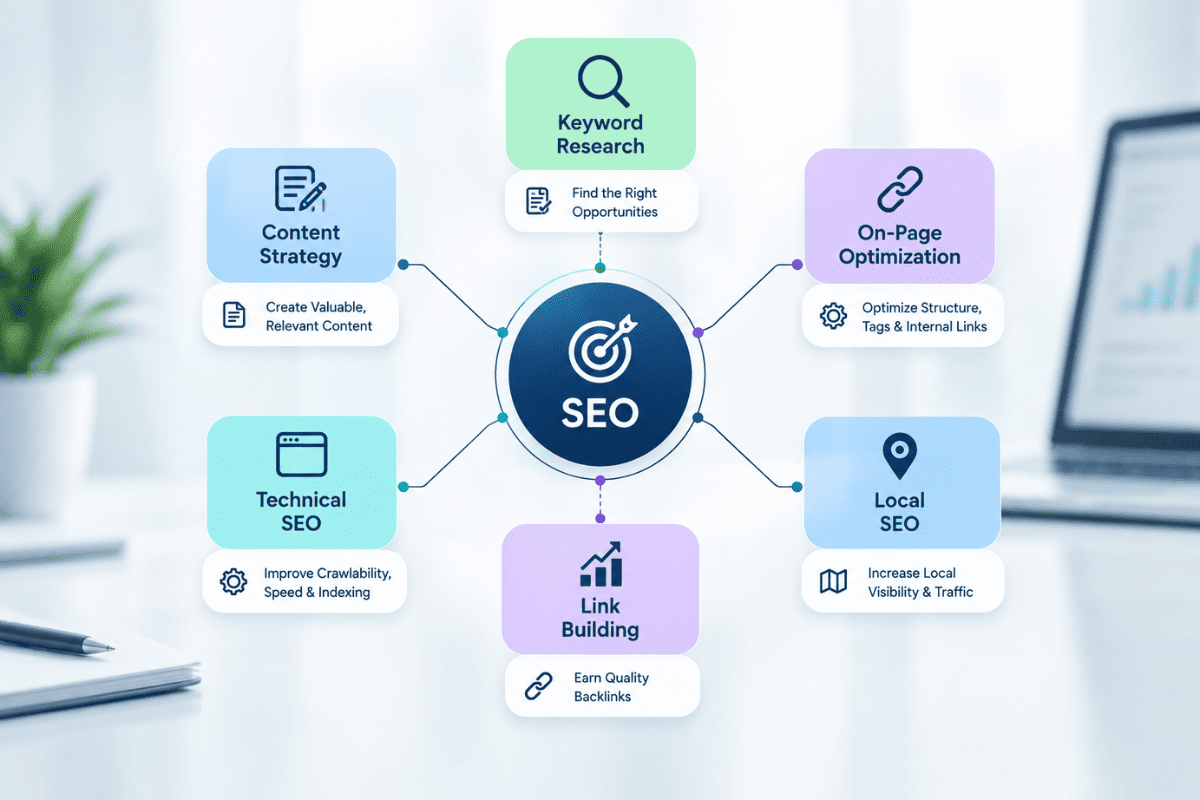
When I look at how SEO has evolved over the years, I believe the biggest shift has been moving away from chasing individual keywords and focusing on building authority around complete topics. Search engines are becoming better at understanding concepts and whether a brand truly understands its industry.
I have seen many businesses publish content consistently but struggle to achieve meaningful results because their content lacks structure. Individual articles may rank, but they do not always work together to build a stronger authority signal.
A topical map solves this challenge by creating a strategic structure for content. It helps brands identify the subjects they need to cover and how each piece of content connects with the bigger picture.
A strong topical map helps businesses
Build deeper authority around important industry topics
Identify content gaps and missed opportunities
Create stronger internal linking structures
Develop content that supports both audience needs and business goals
A topical map is not just a content plan. It is the strategic framework that helps a brand become a trusted source within its category.
What Is a Topical Map SEO?
A topical map SEO is a framework that organizes a website’s content around a central subject by connecting core topics, related subtopics, and supporting pages. Instead of creating content around isolated keywords, a topical map helps businesses build a complete content ecosystem that demonstrates expertise within a specific category.
A well-structured topical map may typically include four key elements:
Core Topic: The primary subject a website wants to establish authority around. This becomes the foundation of the entire content strategy
Pillar Topics: Broad categories that cover the major areas within the core topic and create the main content sections of the website
Supporting Subtopics: Detailed pages or articles that answer specific questions, cover related concepts, and provide deeper information around each pillar
Content Connections: Internal links that connect related pages, helping users navigate the website while allowing search engines to better understand the relationship between different topics
From my experience, a topical map gives businesses clarity in what content they need to create, how each page supports the bigger strategy, and where opportunities exist to strengthen their authority.
How to Create a Topical Map SEO Strategy
When I approach SEO strategy, I believe the biggest mistake businesses make is creating content without a clear direction. Publishing more pages does not automatically build authority. Every piece of content should have a purpose, support a larger topic, and contribute to how your brand is understood by both audiences and search engines.
A topical map helps create that structure. It gives businesses a clear road map for identifying important topics, organizing content, and building a connected knowledge base around their industry.
Here is the process I follow when building a topical map SEO strategy:
Step 1: Identify Your Website’s Main Topic
The first step is defining the primary subject your website wants to become known for.
From a founder’s perspective, this decision should not be based only on search volume. The main topic should connect with your business direction and the audience you want to attract.
Consider:
Your business goals
Your audience’s search behavior
Your products or services
Your industry expertise
For example, an SEO agency may choose SEO as its core topic.
This topic can then expand into broader pillars such as:
Technical SEO
Content SEO
Link Building
Local SEO
Your core topic becomes the foundation for every supporting page you create.
Step 2: Determine Relevant Supporting Core Topics and Subtopics
Once the main topic is defined, the next step is expanding it into related areas.
A strong topical map does not focus on one article or keyword. It covers the connected questions and subjects that help a brand demonstrate deeper expertise.
Competitor content analysis
Search engine results
Customer questions
Industry discussions
People Also Ask sections
For example, under link building, supporting subtopics may include:
Guest posting
Digital PR
Backlink analysis
Outreach strategies
Step 3: Assess Topic Relevance and Business Value
Not every possible topic deserves a place in your content strategy.
The best topical maps prioritize subjects that align with your brand and create meaningful opportunities.
Evaluate topics based on:
Relevance to your brand
Connection with your services
Importance to your audience
Potential business value
The objective is not to cover every possible keyword. It is to build authority around topics that support your company’s long-term goals.
Step 4: Verify the Traffic Potential of Each Subtopic
After identifying relevant topics, analyze their search potential.
Review factors such as:
Search demand
Ranking competition
Existing search results
Audience interest
This step helps determine which topics are worth prioritizing and where your content investment can create the strongest impact.
Step 5: Finalize the Topics You Will Target
Once topics have been evaluated, organize your final content opportunities into a clear hierarchy:
Core topic
↓
Pillar topics
↓
Supporting articles
↓
Related resources
This structure ensures every content piece has a clear purpose and contributes to a larger SEO strategy.
Step 6: Map Existing Pages and New URLs to Each Topics
A topical map becomes actionable when it connects directly with your website structure.
Create a document or spreadsheet that includes:
Target topic
Primary keyword
Search intent
Existing URL
Planned URL
Internal linking opportunities
This process helps identify content gaps, improve existing pages, and determine where new content should be created.
Step 7: Plan Follow-Up Tasks and Execute the Strategy
A topical map is only valuable when it moves from strategy into execution.
The final step is creating an action plan for:
Creating new content
Updating existing pages
Building internal links
Improving outdated resources
Tracking performance
Using a project management system keeps the strategy organized and ensures every content opportunity moves toward completion.
From my experience, the strongest SEO strategies are not built by creating more content. They are built by creating the right content with a clear purpose, structure, and connections to the bigger business vision.
How to Complete a Topical Map SEO Audit for an Existing Website
When I review an existing website, I rarely start by asking, “How much content do we need to create?” The better question is, “What content already exists, what is missing, and how can we build a stronger authority structure?”
A topical map SEO audit helps answer these questions by evaluating your current content, identifying opportunities, and creating a clearer path forward.
Step 1: Audit Existing Content
The first step is understanding your current content landscape.
Review:
Existing pages and content coverage
Current keyword rankings
Content overlap between pages
Missing topics within your core category
This process helps identify which pages are already contributing to authority and which areas need improvement.
Step 2: Identify Content Gaps
After reviewing existing content, compare your website against competitors, industry leaders, and current search results.
Look for:
Missing subtopics
Unanswered audience questions
Weak content areas
Topics competitors cover more comprehensively
These gaps often reveal opportunities where your brand can create more valuable and complete resources.
Step 3: Prioritize Content Opportunities
Not every content gap should become an immediate priority.
I recommend ranking opportunities based on:
Business importance
Audience relevance
Search demand
Ranking opportunity
A successful topical map is not about creating the most content possible. It is about creating the right content, in the right order, to build lasting authority around the topics that matter most to your business.
How Topical Maps Support AI Search Visibility
When I look at the future of search, I believe visibility will depend less on ranking individual pages and more on how well a brand demonstrates expertise across an entire subject.
AI-powered search systems need structured information and clear relationships between concepts to understand which sources are valuable and credible. A well-developed topical map creates this structure by connecting related topics, supporting pages, and deeper resources.
A strong topical map may help brands improve AI search visibility by:
Creating clearer topic relationships: Connected content helps AI systems understand how different concepts within a category relate to each other
Building stronger authority signals: Comprehensive coverage shows deeper knowledge of a subject rather than focusing on a single search query
Improving content organization: Structured pages make it easier for search engines and AI systems to identify relevant information
Supporting consistent content growth: A topical map provides a framework for creating content that expands expertise over time
The future of search belongs to brands that build knowledge systems, not just content libraries. A topical map helps create the foundation for that knowledge system by turning scattered content into a connected authority asset.
Also Read: AI Search Optimization: How to Get Your Brand Into AI Answers (Not Just Google's)
Final Takeaway: Topical Maps Are the Foundation of Scalable SEO
From my perspective, successful SEO is no longer about creating content randomly and hoping individual pages gain visibility. It requires a strategic structure that connects every piece of content to a larger goal.
A well-planned topical map helps brands:
Build authority around important industry topics
Create stronger connections between related pages
Identify new content opportunities
Develop resources that genuinely support their audience
As search continues to evolve, brands need to think beyond publishing more pages. They need to build a deeper understanding of their industry and organize that knowledge in a way search engines can recognize.
The brands that win search visibility will not be the ones publishing the most pages. They will be the ones building the strongest understanding of their industry.
FAQs
1. How do you create a topical map for SEO?
Create a topical map by defining your core topic, identifying supporting subtopics, evaluating business relevance, analyzing traffic potential, and organizing content into connected clusters.
2. What is the difference between keyword research and a topical map?
Keyword research identifies individual search terms, while a topical map organizes those terms into a broader content strategy focused on building authority around a subject.
3. How do topical maps improve internal linking?
Topical maps create logical connections between related pages, helping users navigate content while allowing search engines to better understand relationships between different topics.
4. How many topics should a topical map include?
The number of topics depends on the industry, website size, and business goals. A strong topical map should focus on covering important areas comprehensively rather than targeting an arbitrary number of topics.
5. Do topical maps help with AI search visibility?
Yes. Topical maps help organize information clearly, making it easier for AI-powered search systems to understand content relationships and recognize a website’s expertise within a subject.