Digital PR matters more for long-term authority and brand trust, while traditional link building works best for rapid, targeted page-level SEO adjustments.
Digital PR
Core focus: Earning media attention, brand mentions, and high-authority editorial citations.
How it works: Pitching original data, research, or expert commentary to journalists.
Main benefit: Builds compounding domain authority, trust, referral traffic, and visibility in AI search engines.
Drawback: Slower, less controllable, and more expensive per campaign.
Traditional Link Building
Core focus: Acquiring specific backlinks to boost particular URLs or keywords.
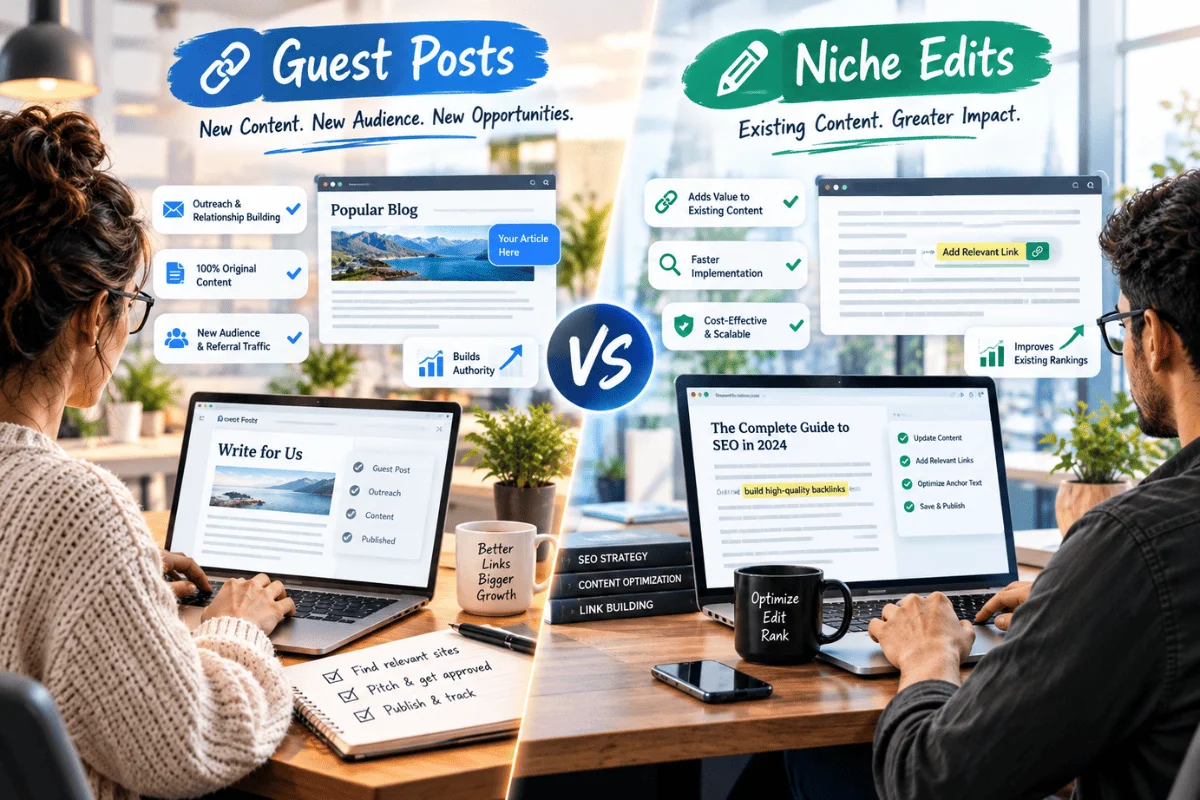
How it works: Guest posting, niche edits, and direct outreach to site owners.
Main benefit: Fast execution, high control over anchor text, and precise targeting for commercial pages.
Drawback: Easily devalued by Google if manipulative; does not build broad brand equity.
Digital PR earns brand visibility and high-authority coverage through media relationships. At the same time, link building focuses on acquiring backlinks that support specific SEO goals, and we use both, just for different jobs. My team has run PR-led campaigns for clients who wanted a reputation and straightforward link campaigns for clients who wanted more targeted SEO support, and neither one replaces the other.
So here’s a breakdown of what each approach actually involves, how they differ in practice, and how I decide which one (or both) fits a given campaign.
Key Takeaways
Digital PR uses newsworthy stories, original research, and media outreach to earn coverage, brand mentions, and backlinks.
Traditional link building focuses more directly on securing relevant backlinks that support specific pages and SEO goals.
Digital PR usually offers broader brand visibility, while link building provides more control over target websites and landing pages.
Neither strategy is automatically better; the right choice depends on your SEO goals, budget, resources, and timeline.
Using Digital PR and targeted link building together can create a more balanced off-page SEO strategy.
Digital PR vs Link Building: Quick Comparison
Factor | Digital PR | Link Building |
Primary Goal | Brand visibility, authority, and media coverage | Backlinks that boost keyword rankings |
Outreach Target | Journalists, editors, and media outlets | Webmasters, bloggers, and site owners |
Content Type | Data studies, surveys, expert commentary | Guest posts, resource pitches, niche edits |
Link Quality | High-authority, often 70+ Domain Rating | Variable, low to mid authority |
Time to Results | Slower ramp-up, compounding value | Faster, but returns taper off |
Typical Cost | Higher investment, more expertise needed | Lower cost, easier to scale |
Secondary Benefits | Brand trust, referral traffic, social proof | Minimal beyond the link itself |
What Is Digital PR?
I think of digital PR as PR that lives online. Instead of pitching a newspaper, we are pitching a journalist at a digital publication, a podcast host, or an industry newsletter. The goal isn't just a backlink; it's getting my client's name and expertise in front of an audience that already trusts the outlet covering them. Links often follow, but they're a byproduct of good coverage, not the whole point.
How Does Digital PR Work?
Start with a story or dataset worth covering, usually original research, a survey, or a timely reaction to breaking news.
I package the findings with visuals or a clear narrative journalists can use right away.
Pitch it to relevant reporters and editors instead of blasting a mass list.
Then follow up once, add a new angle if needed, and keep building the relationship for future coverage.
How Does Digital PR Support SEO?
Digital PR can earn editorial links and mentions from established publications, helping strengthen a brand's online authority and visibility. It can also drive referral traffic and branded search interest, giving the campaign value beyond the backlink itself.
Pros of Digital PR
• Earns links from sites with strong authority • Builds brand trust that can outlast any single campaign • Creates authoritative online coverage that may increase opportunities for visibility in AI search and citation systems • Generates referral traffic and social proof alongside the SEO value |
What Is Traditional Link Building?
When comparing digital PR vs. traditional link building, link building is more straightforward to me. Reach out to site owners directly and ask for a link, whether through a guest post, a resource page mention, or a niche edit. It's transactional by nature, and that's fine; it still works when the outreach is relevant and the content is genuinely useful.
How Does Link Building Work?
Find sites that are genuinely relevant to your client's niche.
Pitch a guest post, a resource, or existing content worth linking to.
Negotiate the placement, anchor text, and publish timeline.
Track the live link and monitor it for removal or changes.
How Does Link Building Support SEO?
Relevant backlinks remain an important part of off-page SEO. A steady stream of useful, contextually relevant links can help strengthen specific pages, reinforce topical relevance, and support organic search performance.
Pros of Traditional Link Building
• Faster to execute than most PR campaigns • More predictable and easier to scale month over month • Works well for niche, keyword-specific targets • Often lower cost per link |
What Are the Major Differences Between Digital PR and Link Building?
This section matters most when you're deciding where to put your budget. Once you get past the surface-level definitions, the real differences show up in purpose, audience, control, and predictability.
Purpose
Every strategy starts with a purpose, and this is where digital PR and link building diverge the most. One is built for reputation. The other is built for more targeted SEO support.
Digital PR: Builds brand authority and visibility, with links as a welcome side effect rather than the main goal.
If your client's biggest problem is that nobody's heard of them, PR solves that.
Link Building: Exists specifically to acquire backlinks that support SEO performance, with any brand exposure a secondary bonus.
If the problem is that a specific page lacks authority, link building can be easier to target toward that need.
Outreach Audience
Who you pitch shapes everything else about the campaign, including the content you create and the turnaround time you can realistically expect.
Digital PR: Journalists, editors, and producers at media outlets who decide what counts as newsworthy.
Link Building: Webmasters, bloggers, and niche site owners who decide what's useful to their own readers.
Journalists can be more selective because the story has to fit their editorial priorities, which is one reason PR campaigns may take longer to show results.
Reason for the Placement
The reason someone agrees to link back tells me how durable that link is likely to be over time.
Digital PR: A journalist links because the story is genuinely newsworthy and adds credibility to their own piece.
Link Building: A webmaster links because the content is useful, relevant, or part of an agreed placement.
Editorial links earned naturally may be more durable because they exist for a genuine editorial reason rather than solely through an outreach arrangement.
Control Over Links
This is where many clients get surprised, since more control isn't always the advantage it sounds like.
Digital PR: Less control, since editors decide the anchor text, placement, and whether a link appears at all.
Link Building: More control, since placement and anchor text can often be discussed directly before anything goes live.
Less control from PR can sometimes produce a more natural-looking link profile.
Brand Visibility
Rankings matter, but so does whether real people actually see your client's name attached to the coverage.
Digital PR: Puts the client's name in front of real readers, listeners, or viewers who could become customers.
Link Building: Usually prioritizes SEO value and topical relevance, although well-placed links can also generate referral traffic.
I've seen clients get direct leads from a single strong press mention. That is less common from a niche placement with limited readership.
Campaign Predictability
Budgeting and reporting get a lot easier when I know roughly what to expect from a campaign before it starts.
Digital PR: Less predictable, since results depend on whether a journalist decides the story is worth covering at all.
Link Building: More predictable and scalable, since outreach volume and prospecting can be planned more directly.
Digital PR vs Link Building: Which Is Better?
Neither one is universally better. I choose based on what the client actually needs right now — here's how that decision usually breaks down:
Choose Digital PR When... | Choose Link Building When... |
You want brand recognition that reaches beyond search rankings | You need movement on specific keyword rankings soon |
You have original data, research, or a genuinely newsworthy story | Your budget is limited or needs to stretch across more placements |
You're competing in a crowded niche where everyone has similar links | You're targeting niche-relevant sites directly |
Your budget supports a longer-term investment with compounding returns | You want predictable, scalable link volume every month |
When Using Both Makes More Sense
In my experience, the strongest SEO strategies use both. Digital PR earns the high-authority links that build trust, while link building fills in the niche-relevant links that reinforce topical authority. Relying on just one leaves gaps that the other is better suited to fill.
How Do You Measure Digital PR and Link Building?
Track different metrics for each, since they're built to accomplish different things. Here's the framework I follow, from setting the goal to optimizing the next campaign through Digital PR and Link building.
Need Help Choosing Between Digital PR and Link Building?
If you are unsure whether your SEO strategy needs stronger media visibility, targeted backlinks, or a combination of both, Outreach Influencers can help you build an approach around your actual search goals.
We work across Digital PR and strategic link building to identify the right opportunities, target relevant publications and websites, and create campaigns that support both authority and organic visibility. Explore our outreach services or get in touch to discuss which approach makes the most sense for your brand.
Frequently Asked Questions
Is Digital PR a Type of Link Building?
No, not exactly. Digital PR is a media and brand strategy that often produces links as a side effect, while link building exists specifically to acquire links as the primary goal.
How Does Digital PR Help With AI Search (SearchGPT / GEO)?
Digital PR can increase authoritative online mentions and coverage, giving AI search systems more credible web sources to retrieve or cite.
How Do Costs Compare Between Both Tactics?
Link-building costs often depend on outreach volume, content requirements, and the quality of target sites. Digital PR may require more upfront investment because campaigns can involve research, creative assets, data analysis, and media outreach.
How Do You Turn Unlinked Brand Mentions Into Links?
Track brand mentions with monitoring tools, reach out to the author while the coverage is still fresh, thank them, and politely offer a direct link to the original resource if it adds value for their readers.