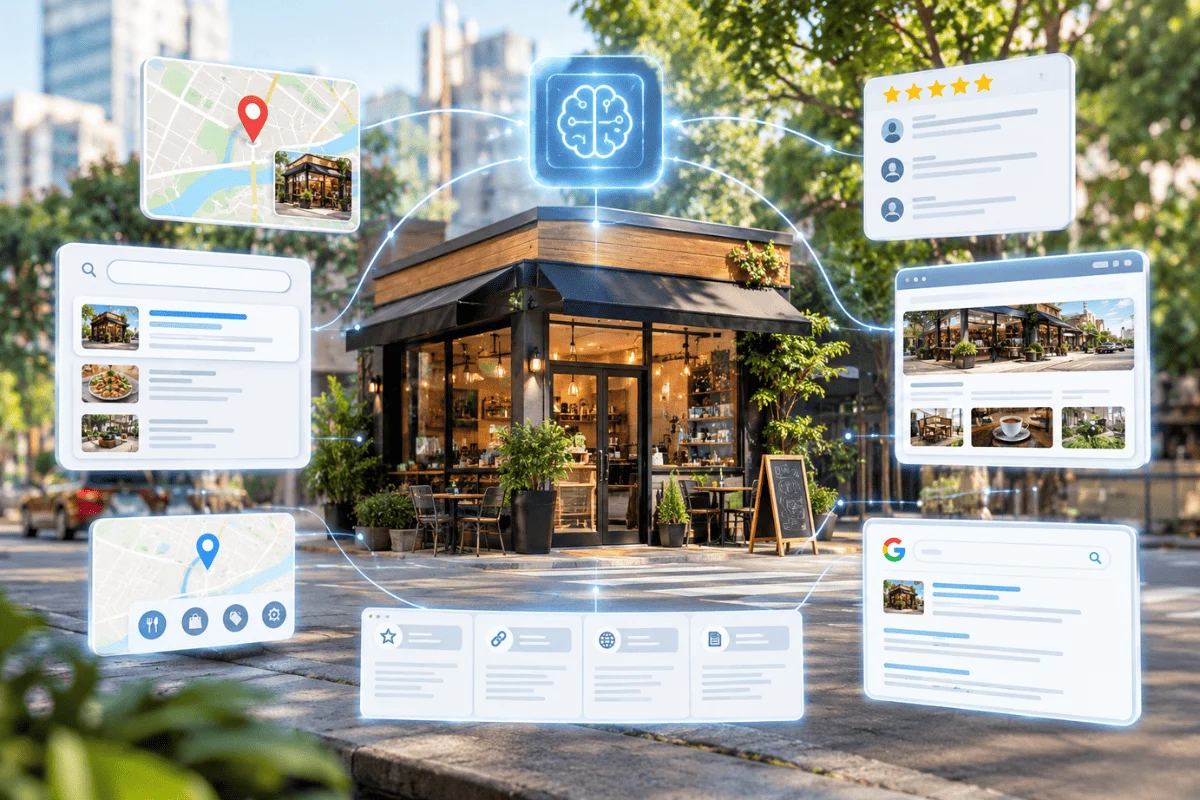
When I look at how local businesses approach visibility today, I see a major shift taking place. For years, businesses competed for attention through Google rankings, map visibility, and paid advertising. While these channels remain important, the way customers discover and evaluate businesses is evolving.
AI-powered search experiences are changing the decision-making process. Customers are no longer only searching with short phrases. They are asking detailed questions and expecting AI platforms to recommend the best solutions.
For local businesses, this means visibility now depends on more than traditional rankings. Businesses need to build signals that help AI systems understand:
Who they are: Clear business information, expertise, and positioning
What they offer: Detailed services and solutions that match customer needs
Where they operate: Strong local relevance and location-specific authority
Why they deserve recognition: Trust signals such as reviews, mentions, and third-party validation
The future of local visibility is not just about ranking for a search term. It is about becoming the business AI systems trust enough to recommend. The companies that invest in authority, relevance, and reputation today will be better positioned for the next evolution of search.
What Is AI Search Optimization for Local Business?
AI search optimization for local businesses is the process of improving a company’s digital presence so AI-powered search engines, conversational platforms, and AI overviews can better understand, evaluate, and recommend the business to relevant customers.
Traditional SEO has primarily focused on helping webpages rank higher for specific keywords. AI search optimization takes a broader approach by helping machines understand the complete context behind a business, including its expertise, services, reputation, and local relevance.
For AI systems to confidently recommend a business, they rely on signals such as:
Local specificity: Clear information about where a business operates and which communities it serves.
Clean structured data: Organized business information that helps AI systems accurately interpret details such as services, locations, and contact information.
Authentic customer reviews: Real customer feedback that provides context about business experiences and credibility.
Strong business information signals: Consistent details across websites, directories, profiles, and other online platforms.
Businesses need to optimize beyond just keywords. They need to clearly communicate:
Who they are and what makes their expertise valuable.
What services they provide and which customer needs they solve.
Which locations they serve and where they have local relevance.
What customers say about them through reviews and third-party recognition.
AI search optimization is ultimately about making a business easier for both people and machines to understand, trust, and recommend.
Core AI Search Optimization Strategies for Local Businesses
When I think about AI search optimization for local businesses, I do not see it as another technical checklist. The foundation is much broader: businesses need to create clearer signals about who they are, what they offer, and why customers should trust them.
AI systems are becoming better at understanding context, intent, and reputation. This means local businesses need to move beyond simply creating pages and start building a digital presence that reflects genuine expertise and authority.
Here are the strategies I believe will matter most:
1. Create Location-Specific Content Instead of Generic Pages
One of the biggest mistakes I see businesses make is creating multiple location pages by changing only the city name. These pages may target keywords, but they often fail to show real local relevance.
AI systems are looking for deeper context. They need to understand not just where a business operates, but why that business is relevant in a specific market.
A stronger approach is creating location-focused content that includes:
Local customer examples that demonstrate real experience in the area.
Neighborhood-specific information that reflects genuine local understanding.
Regional challenges that customers in that market may face.
Local industry insights that showcase expertise within the community.
The goal is not simply to mention a location. The goal is to prove that your business understands and serves that location.
2. Optimize for Conversational Search Queries
Search behavior is becoming more conversational. Customers are no longer only entering short keywords—they are asking complete questions and expecting useful answers.
AI platforms are designed around understanding these questions, which means businesses need content that matches how people naturally seek information.
Instead of focusing only on keywords like
“SEO agency”
Businesses should create content around questions such as:
“How do businesses choose an SEO agency?”
“What should a local business look for in an SEO partner?”
“Which SEO strategies work best for small businesses?”
Other conversational formats include:
“Who offers…”
“What is the best…”
“How much does…”
“Which company should I choose…”
The businesses that answer real customer questions will have a stronger opportunity to appear when AI systems are helping users make decisions.
3. Implement Structured Data
AI systems need clear information to understand businesses accurately. Structured data helps organize important details in a format that search engines and AI platforms can interpret more effectively.
For local businesses, important structured data elements include:
LocalBusiness schema for business details, location, and services.
FAQ schema for commonly asked customer questions.
Organization information to strengthen brand understanding.
The benefits include:
Clearer business understanding.
More accurate information interpretation.
Improved machine readability.
Structured data does not replace strong content or authority, but it helps create a clearer foundation for AI systems to understand a business.
4. Build Strong Review and Reputation Signals
Reviews are becoming more than customer feedback. They provide AI systems with valuable context about how customers experience a business.
AI platforms can analyze review information to understand:
Services customers mention.
Specific experiences customers highlight.
Business strengths.
Local relevance.
A business with hundreds of generic reviews provides less context than a business where customers clearly describe their experience.
Strong reputation signals come from:
Encouraging detailed and authentic customer reviews.
Responding consistently to customer feedback.
Maintaining a trustworthy online presence.
Your reputation is no longer just something potential customers see. It is also part of how AI understands your business.
5. Build External Authority Through Digital PR
One of the biggest shifts with AI search is that your own website is no longer the only source of truth.
AI systems look across the internet to understand whether a business is credible and recognized within its industry.
External authority signals include:
Industry publication mentions.
Expert contributions.
Relevant backlinks.
Brand references across trusted websites.
This is where digital PR and authority building become increasingly important.
A business can publish hundreds of pages about its expertise, but external recognition creates a stronger trust signal.
The businesses that win AI visibility will not only be optimized on their own websites. They will be recognized across the wider digital ecosystem.
How Does AI Search Engine Optimization Work?
AI search engine optimization works by helping AI systems understand, evaluate, and connect businesses with relevant customer queries. Unlike traditional search engines that primarily match keywords with webpages, AI-powered search experiences analyze context, relationships, authority, and trust signals before generating recommendations.
For local businesses, this process comes down to three important areas:
1. AI Understands Your Business Through Structured Information
Before AI can recommend a business, it first needs to understand what that business is.
Clear and consistent business information helps AI systems accurately interpret important details such as:
Business identity: Name, address, phone number, and other core details.
Services offered: What solutions the business provides and who they serve.
Location relevance: Which areas, communities, or regions the business operates in.
Customer information: Common questions, services, and experiences associated with the brand.
Businesses can strengthen these signals through:
LocalBusiness schema.
FAQ schema.
Consistent name, address, and phone number information.
Updated operating hours.
Detailed service information.
The clearer the information, the easier it becomes for AI systems to understand where a business fits.
2. AI Matches Businesses With Conversational Queries
The way people search is becoming more conversational. Instead of typing short phrases like
“plumber near me”
Users are increasingly asking detailed questions, such as:
“Find a reliable plumber open late near me.”
AI systems are designed to understand the intent behind these questions. This means businesses need content that answers complete customer needs, not just individual keywords.
Important content formats include:
FAQ content.
Detailed service pages.
Location-specific answers.
Problem-solving guides.
The goal is to create resources that directly address the questions customers are asking.
3. AI Evaluates Reputation Signals
AI search does not rely only on information a business publishes about itself. It also looks for external signals that confirm credibility.
These signals include:
Customer reviews.
Third-party mentions.
Industry recognition.
Digital authority through relevant backlinks and brand references.
A business can claim expertise, but AI systems look for evidence that supports those claims.
The companies most likely to appear in AI-generated recommendations will be those that combine clear information with genuine authority and recognition across the digital ecosystem.
AI Search Engine Optimization Best Practices for Local Businesses
AI search optimization requires businesses to build a digital presence that is easy for both customers and AI systems to understand. From my perspective, the foundation is not just about optimizing webpages; it is about creating consistent information, relevant content, and strong authority signals that help AI recognize a business as a trusted source.
A strong AI search optimization strategy focuses on multiple areas:
Consistent Business Information: Maintaining accurate business details across websites, directories, social profiles, and review platforms so AI systems can confidently understand the business.
Original Local Content: Creating location-specific content that reflects local expertise, answer customer questions, and demonstrates industry knowledge instead of relying on duplicate pages or generic descriptions
Brand Entity Building: Strengthening how AI understands a business through detailed company information, expert profiles, clear service pages, and digital mentions.
AI Visibility Monitoring: Tracking brand mentions, AI recommendations, competitor visibility, and content gaps to identify opportunities for improvement
The goal of AI search engine optimization is not simply to appear in search results. It is to build a digital ecosystem where AI platforms can accurately understand a business, recognize its authority, and confidently recommend it to relevant customers.
Final Takeaway: Local Businesses Need to Become Trusted AI Answers
The future of local search is moving beyond rankings and toward recommendations. AI platforms are changing how customers discover businesses, which means local companies need to focus on building visibility signals that go beyond traditional SEO.
From my perspective, businesses that succeed in AI search will be the ones that build a complete digital authority system:
Clear business information that helps AI understand who they are and what they offer
Relevant local content that answers real customer questions
Strong reputation signals through reviews, mentions, and industry recognition
External authority that validates expertise across the wider digital ecosystem
AI search optimization is not about trying to manipulate AI platforms into mentioning a brand. It is about becoming the kind of business that deserves to be recommended.
The next stage of search will reward businesses that are not only visible but also understood, trusted, and recognized. Companies that invest in authority today will be better positioned as AI continues to reshape how customers find local businesses.
Related Blogs :
What Is Semantic SEO: Building Topical Depth for AI-First Research
SEO for CBD: What Makes It Different
FAQs
1. How Does AI Search Optimization Work?
AI search engine optimization works by improving business information, content relevance, reputation signals, and online authority so AI systems can better understand and connect businesses with user searches.
2. How Can Local Businesses Appear In AI Search Results?
Local businesses can improve AI visibility by creating useful local content, maintaining accurate business information, earning trusted mentions, and building strong reputation signals through reviews and authority sources.
3. Is AI Search Optimization Replacing Local SEO?
No, AI search optimization expands traditional SEO by adding new focus areas such as entity understanding, conversational search, digital authority, and AI-driven recommendations.
4. What Are the Best AI Search Optimization Strategies for Local Businesses?
The most effective strategies include creating original local content, optimizing structured business information, improving online reputation, and building authority through trusted digital mentions.