Search intent matters in SEO because Google wants to rank pages that best match what a person is actually trying to find. A page can use the right keyword, be well-written, and still struggle to rank if it answers the wrong question or uses the wrong content format.
I've seen this happen across plenty of client blogs. Sometimes the issue isn't the keyword, the backlinks, or even the content quality the page just doesn't line up with the searcher's goal.
By the end, you'll know how to read search intent more clearly and use it to create content that matches what both users and search engines expect.
Key Takeaways
Search intent is the reason behind a search what someone's actually trying to do, not just the words they typed.
There are four main types: informational, navigational, commercial, and transactional.
Google tries to match intent before ranking pages, so the right keyword in the wrong format can still fail to rank.
SERP features like snippets, shopping results, and map packs are some of the fastest ways to spot intent before you write.
Content type matters as much as the keyword: a how-to needs a guide, a comparison needs a table, a purchase-ready term needs a product page.
Matching intent affects rankings, traffic quality, and how long visitors stay.
What Is Search Intent in SEO?
Search intent is the reason behind a search. It reflects what someone is actually trying to do, whether that means finding an answer, visiting a specific website, comparing options, or making a purchase.
Before Google can decide which pages should appear in the results, it first has to understand that underlying goal. That is why two searches using similar words can sometimes produce very different results.
Search Intent vs Keyword Meaning
A keyword is the phrase someone enters into Google. Search intent is the purpose behind that phrase.
Take the word “Apple,” for example. Someone could be looking for the fruit, Apple the technology company, or even the record label. The pages appearing at the top of the SERP usually give you a strong clue about which meaning Google believes is most relevant.
Search Intent vs Search Query
A search query is the exact wording typed into the search bar, while intent explains what the person hopes to find.
Even a small wording change can shift that intent. For example, “ingredients for dog food” may suggest someone looking for information about making dog food. “Dog food ingredients,” on the other hand, may point more toward someone checking or comparing what goes into commercial products.
Why Is Search Intent Important for SEO?
Ignoring search intent can waste effort. I’ve seen well-written pages with solid keyword targeting struggle simply because they were built around the wrong type of answer.
Here’s why understanding intent matters so much in SEO.
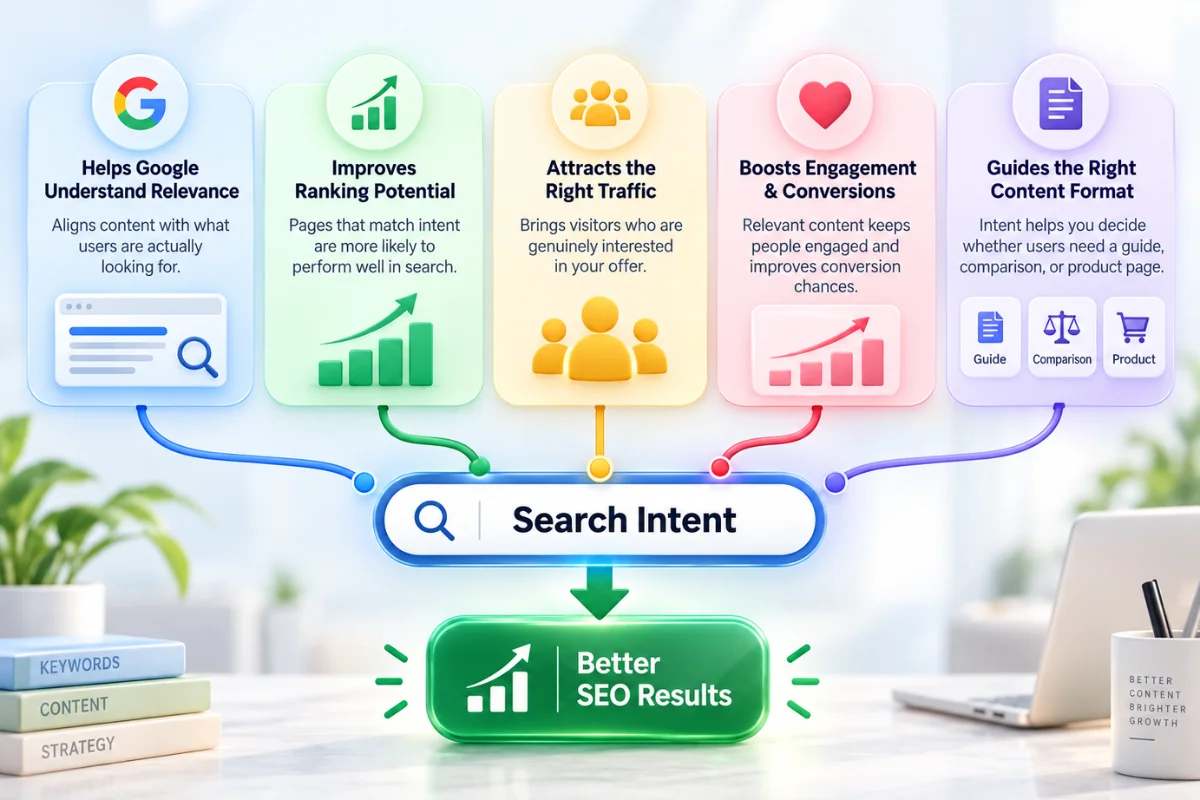
Search Intent Helps Google Understand Page Relevance
Google explains that its ranking systems first try to understand what a searcher is looking for before deciding which results are most relevant.
When a page closely matches that goal, it has a better chance of being seen as useful for the query. Relevance starts with answering the right need, not simply repeating the right keyword.
Matching Intent Can Improve Ranking Potential
Google’s Search Quality Evaluator Guidelines spend significant time discussing user intent and whether a result satisfies that intent.
That makes one thing clear: a page has a better chance of performing well when its purpose, format, and information align with what people are actually searching for.
Search Intent Helps Attract the Right Organic Traffic
Getting traffic is useful only when the visitors landing on your page are looking for what you provide.
A page that matches intent is more likely to attract people with the right expectations. Instead of clicking in, realizing the page is irrelevant, and leaving, they are more likely to find something that fits their original search.
Intent Alignment Can Improve Engagement and Conversions
When visitors land on a page that gives them what they expected, they are more likely to keep reading, explore other pages, or take the next step.
If the intent is wrong, that opportunity can disappear quickly. Someone looking for a quick comparison, for example, may not stick around for a long educational article before reaching the information they wanted.
Search Intent Helps You Choose the Preferred Content Type
Search intent also helps determine what kind of page you should create.
A how-to query may call for a detailed guide. A comparison keyword may work better as a side-by-side article or table. A product or category page may better serve a purchase-focused query.
Understanding that before you start writing helps you create the right page instead of forcing every keyword into a blog post.
What Are the Four Main Types of Search Intent?
Every query falls into one of four buckets, sometimes blending two at once. Understanding these types of search intent is the foundation of any real search intent optimization strategy.
Informational Search Intent
The searcher wants to learn something. These queries often start with “how,” “what,” or “why.” A search for “what is search intent” is a textbook example.
Navigational Search Intent
The searcher already knows where they want to go and uses Google as a shortcut instead of typing a full URL. “Semrush login” is a classic navigational query.
Commercial Search Intent
The searcher is comparing options before committing to a purchase. Words like “best,” “top,” and “review” signal this stage, as in “best SEO tools 2026.”
Transactional Search Intent
The searcher is ready to act right now, usually to buy, sign up, or download. “Buy Yoast SEO premium” leaves little doubt about what the searcher wants next.
Quick Comparison
Intent | What the User Wants | Common Keywords | Best Content Type | Example |
Informational | Learn something or answer a question | how to, what is, why | Blog posts, guides, FAQs | "What is search intent" |
Navigational | Reach a specific website or page | Brand or product name | Homepage, branded landing page | "Semrush login" |
Commercial | Compare options before buying | best, top, review, vs | Comparison posts, reviews, roundups | "best SEO tools 2026" |
Transactional | Complete an action now | buy, order, discount, sign up | Product pages, checkout, landing pages | "buy Yoast SEO premium" |
How Does Google Understand Search Intent?
Google can't know exactly what someone's thinking, but it can make a strong guess based on the words they use, the context of the query, and the types of results people usually engage with.
Signal | What It Tells Google |
Semantic search and query meaning | Google looks past exact keyword matches — a search for "affordable phone" can surface pages about "budget smartphone" because the meaning lines up |
Search context and query modifiers | Small words like "buy," "best," "near me," "review," or "free" shift intent even when the main keyword stays the same |
SERP features | Featured snippets usually signal informational intent, shopping results signal purchase intent, and map packs signal a local search |
Google's Know, Do, Website, Visit-in-Person model | From the same Search Quality Evaluator Guidelines — it overlaps heavily with the four intent types above, just labeled differently |
This overlaps closely with semantic SEO, since matching intent and matching meaning are really the same skill viewed from two angles.
.
How Do You Optimize According to Search Intent?
Once you know the intent behind a keyword, optimizing for it comes down to a handful of consistent habits I follow on every article:
Match the Primary Intent Before Writing
Answer the Main Question Early
Match the Dominant Content Type and Format
Cover Important Supporting Questions
Use Clear H2s and H3s That Reflect User Questions
Add Relevant Internal Links Based on the User's Next Step
Avoid Adding Topics That Do Not Serve the Searcher's Goal
FAQs
Can one page target more than one search intent?
Yes. Many keywords carry mixed intent, so a single page can answer an informational question while also including a comparison or a clear next step for buyers.
Does search intent ever change for the same keyword?
It can. Seasonal trends, new product launches, or shifts in how Google interprets a phrase can all move a keyword from one intent type to another over time.
Is search intent only relevant to organic content, or does it affect ads too?
It matters for paid search as well. Ad copy and landing pages that ignore intent tend to see lower quality scores and weaker conversion rates, just like organic pages do.
How is search intent different from semantic search?
Semantic search refers to understanding the contextual meaning of the words in a query. Search intent, on the other hand, refers to the goal of the query. Semantics explain what is stated, while intent explains why it is being asked.