Link building services for small businesses are managed programs that earn your website backlinks from other credible sites to improve rankings, authority, and referral traffic. In my experience, most small business owners either skip link building altogether or get talked into spammy packages that do more harm than good.
This guide breaks down what these services actually do, which strategies work in 2026, what you should expect to pay, and how to choose a provider that protects your site instead of putting it at risk.
Key Takeaways
Link building services for small businesses help earn relevant backlinks that improve website authority, rankings, and referral traffic.
Quality matters more than quantity: updated, trustworthy links provide more SEO value than large numbers of low-quality backlinks.
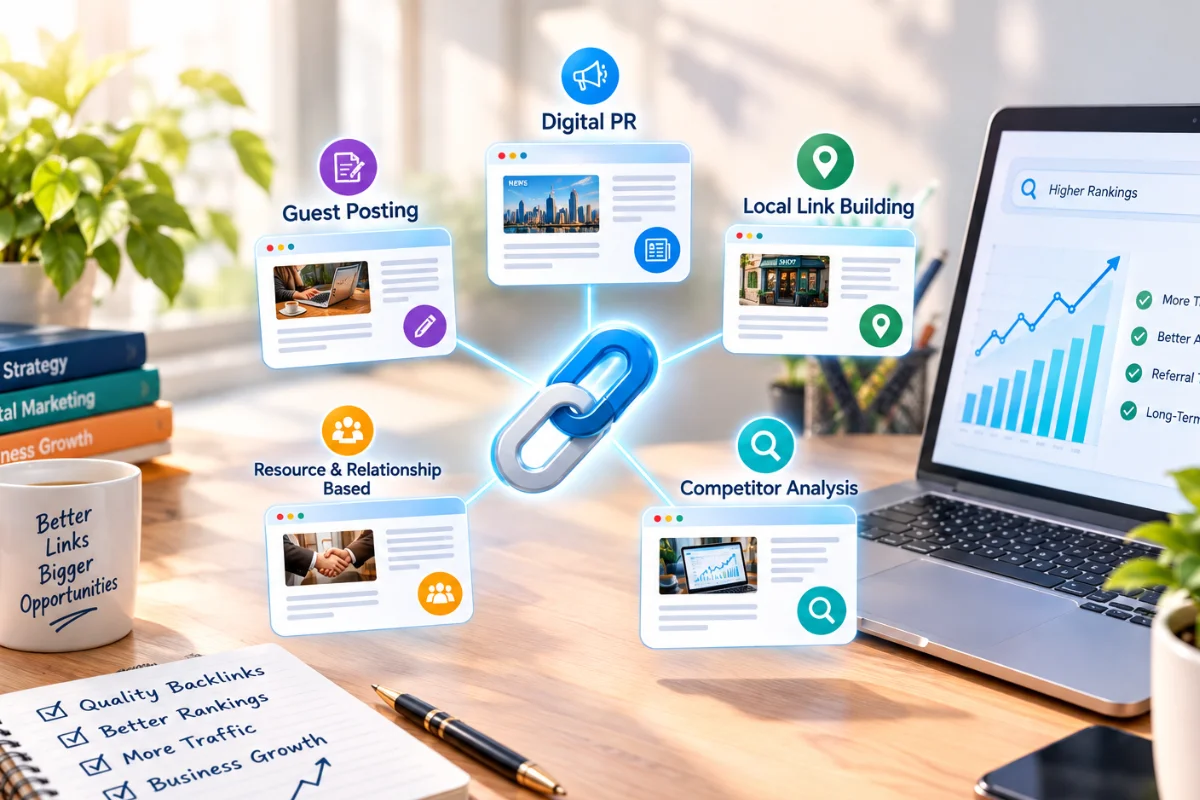
Effective SEO link building services include digital PR, guest posting, local link building, competitor analysis, and brand mention outreach.
Small businesses should evaluate providers based on link quality, transparency, outreach methods, and proven results.
Link building costs depend on factors like website authority, content requirements, industry competition, and campaign type.
Avoid spammy link schemes and focus on sustainable strategies that build long-term search visibility.
Track success through referring domains, keyword rankings, organic traffic, and qualified leads.
What Are Link Building Services for Small Business?
Link building services for small businesses handle the outreach, negotiation, and placement work needed to earn backlinks from other websites. Instead of spending your evenings cold-emailing bloggers, an agency or specialist does the research and relationship-building for you. I think of it less like buying links and more like having someone vouch for you in rooms you don't have time to walk into yourself.
How Professional Link Building Works
A solid link building service usually follows the same core steps: auditing your current backlink profile, identifying relevant sites in your niche, pitching content or partnership angles, securing placement, and reporting on what landed. Here's the general flow:
Audit your existing links and competitor gaps
Build a target list of relevant, quality websites
Create or pitch content worth linking to
Reach out and negotiate the placement
Track the live link and its impact on rankings
Why Is Link Building Important for Small Businesses?
Backlinks remain one of the clearest trust signals search engines use to decide who deserves to rank. For a small business competing against bigger, better-funded rivals, a smart link building strategy is often the fastest way to close that gap.
Improve Search Visibility and Authority
Every quality backlink acts like a vote of confidence from one site to another. Google treats a growing number of relevant votes as a sign your content deserves trust, which is why sites with stronger backlink profiles tend to outrank thinner competitors targeting the same keywords.
Build Brand Credibility and Referral Traffic
When a respected industry site links to you, some of its trust rubs off on your brand, and readers who click through already have a reason to believe you're worth their time. That referral traffic is often more qualified than cold search traffic, because someone else vouched for you first.
Compete With Established Businesses
Big competitors have decades of accumulated backlinks you can't out-produce overnight, but that doesn't mean you can't compete. A small business that earns 20 to 30 highly relevant links from local, niche, or industry-specific sites often outranks a national brand's generic page for the searches that actually bring in customers.
Types of SEO Link Building Services for Small Business
Not every link building service works the same way, and choosing the wrong type for your goals can waste budget fast.
Service Type | What It Involves | Best For |
Digital PR Link Building | Pitching data, stories, or expert commentary to journalists and publishers | Brand authority and broad media coverage |
Guest Posting & Content Outreach | Contributing articles to niche or industry blogs with a contextual link | Topical relevance and steady link flow |
Local Link Building | Citations, chamber listings, sponsorships, and local press | Businesses relying on local search |
Resource & Relationship-Based | Partner links, supplier mentions, resource page inclusions | Businesses with existing industry relationships |
Digital PR Link Building
Digital PR link building pitches your data, research, or expert opinion to journalists and publishers instead of asking for a link outright. It tends to earn higher-authority placements because the coverage is newsworthy first and link-worthy second.
Guest Posting and Content Outreach
Guest posting means writing a genuinely useful article for another site in your niche, with a contextual link back to your own content. Done well, it still works in 2026; done as a mass, low-effort tactic, it gets flagged fast.
Local Link Building
Local link building focuses on citations, directory listings, chamber of commerce pages, local press, and community sponsorships. These links carry geographic relevance that a generic national link can't match for "near me" searches.
Resource and Relationship-Based Link Building
This approach leans on relationships you already have with suppliers, partners, and past clients, and turns them into case studies, co-announcements, or resource page mentions. It's often the cheapest, fastest link-building option for a small business.
Best Link Building Strategies for Small Business Websites
You don't need a huge budget to start earning real backlinks. These four strategies consistently produce results for small business sites, and none require enterprise-level spending.
Strategy | What It Does | Quick Win to Try |
Create Link-Worthy Content Assets | Builds data, tools, or guides other sites want to reference | Turn one customer survey into a shareable stat |
Earn Editorial Links Through Digital PR | Pitches journalists a timely angle instead of asking for a link | Pull one interesting number from your own business data |
Find Opportunities Through Competitor Analysis | Targets sites that already link to businesses like yours | Run a free backlink checker on your top 3 competitors |
Reclaim Unlinked Brand Mentions | Turns existing mentions of your brand into real links | Search your brand name in quotes once a month |
How to Choose the Best Link Building Services for Small Business
Not all providers operate the same way, and the wrong choice can hurt your rankings instead of boosting them. Here's what actually matters when vetting a service.
Criteria | What to Ask | Red Flag |
Link Quality & Relevance | Which sites will you place links on, and how do you pick them? | Vague answers, or "high DA" with no niche relevance |
Experience & Case Studies | Can you show results for a business like mine? | No references or before-and-after data |
Outreach & Reporting Process | Is outreach manual, and how often do I get reporting? | No live reporting or unclear link sources |
This isn't a scientific formula, just a practical way to weigh your options: put the most weight on link quality and relevance, then experience, then transparency, and let pricing be the tiebreaker rather than the deciding factor.
Check Link Quality and Relevance
Ask exactly which sites they place links on, and check whether those sites are relevant to your industry and carry real traffic, not just a high authority score. This one question filters out most low-effort providers before you sign anything.
Review Experience and Case Studies
A legitimate service should show real results for businesses similar to yours, not just vague promises. Ask for before-and-after ranking data or client references you can actually contact.
Understand Outreach and Reporting Process
Find out whether the agency does manual outreach or relies on automated tools and pre-built link networks. You should also get regular, transparent reporting that shows exactly which links went live and when.
How Much Do Link Building Services Cost for Small Businesses?
Pricing depends on the provider and placement quality. Still, small businesses can generally expect to pay anywhere from $50 to $500 or more per individual link, or $500 to $5,000-plus per month for an ongoing managed campaign. Higher-authority placements and digital PR campaigns sit at the top of that range, while local citations and directory work sit near the bottom.
Factors That Affect Link Building Pricing
Factor | Why It Moves the Price |
Authority and traffic of the linking site | Higher-traffic, higher-authority sites charge more for placement |
Digital PR vs. standard guest post | PR campaigns include pitching and media relationships, raising cost |
Content creation included | Full-service writing adds to the fee |
Industry competitiveness | Legal, finance, and health niches typically cost more than local services |
Manual vs. automated outreach | Relationship-based outreach costs more than templated, bulk outreach |
Common Link Building Mistakes Small Businesses Should Avoid
A handful of avoidable mistakes often undo months of otherwise good SEO work.
Mistake | Why It Backfires |
Focusing on quantity over quality | Wastes budget on links that don't move rankings and can create unnatural link-profile spikes |
Using spammy or paid link schemes | Risks a manual penalty that tanks visibility across your entire site |
Ignoring content and strategy | Sends links to pages that can't rank or convert on their own merits |
How to Measure Link Building Success
Tracking the right metrics tells you whether your investment is actually working, instead of just trusting a vendor's monthly report.
Metric | What It Tells You |
Referring domains | The real breadth of your backlink profile, not just total link count |
Keyword rankings | Whether the links are helping you rank for the terms that matter |
Referral traffic & leads | Whether the links are sending real, qualified visitors |
Track Backlinks, Rankings, and Referral Traffic
Review these numbers monthly rather than one-off. A campaign that grows your backlink count but doesn't move rankings or traffic isn't doing its job, no matter how the report is framed.
FAQs
What is the difference between link building services and SEO services?
Link building services focus specifically on earning backlinks and improving website authority. SEO services cover a broader range of activities, including technical SEO, content optimization, keyword research, and link building.
Should small businesses invest in link building before creating more content?
Small businesses should have useful, optimized content before investing heavily in link building. Backlinks work best when they point to pages that provide value and match search intent.
What types of websites should small businesses get backlinks from?
Small businesses should prioritize links from websites that are relevant to their industry, have real audiences, publish quality content, and maintain a trustworthy reputation.
Can local businesses benefit from link building?
Yes. Local businesses can benefit from links from local publications, community websites, business associations, partners, and industry-specific directories because they strengthen local relevance.
Final Thoughts: Choosing the Right Link Building Services for Small Business Growth
Link building isn't optional if you want to compete in search results dominated by bigger, better-funded competitors. Businesses that win treat this long-term, not as a one-off purchase. They pick quality over volume, vet their providers carefully, and pair every link with content worth linking to in the first place.
If you'd rather hand this off to people who do it every day, check out Boost SEO with Digital PR & Link Building Services to see how a focused digital PR and link building strategy can grow your small business's rankings, traffic, and credibility.