To rank in Google AI Overviews, structure content around direct, self-contained answers (100–150 words) placed right under question-based headers, back every claim with a linked source, mark up pages with schema, and build topical authority through interlinked content clusters plus off-site mentions on Reddit, YouTube, and press. Sites that already rank in the top 10 organically are the most likely to get cited — AI Overviews reward existing authority; they don't replace the need for it.
Google's AI Overviews now show up on roughly 1 in 6 searches, and they sit above every blue link on the page. For DTC and ecommerce brands, that's prime real estate — but it comes with a catch: only a handful of sources get cited per query, and most searchers never click through at all.
This guide breaks down exactly how AI Overviews source their answers and the specific, tested tactics for getting your brand into them.
What Are Google AI Overviews?
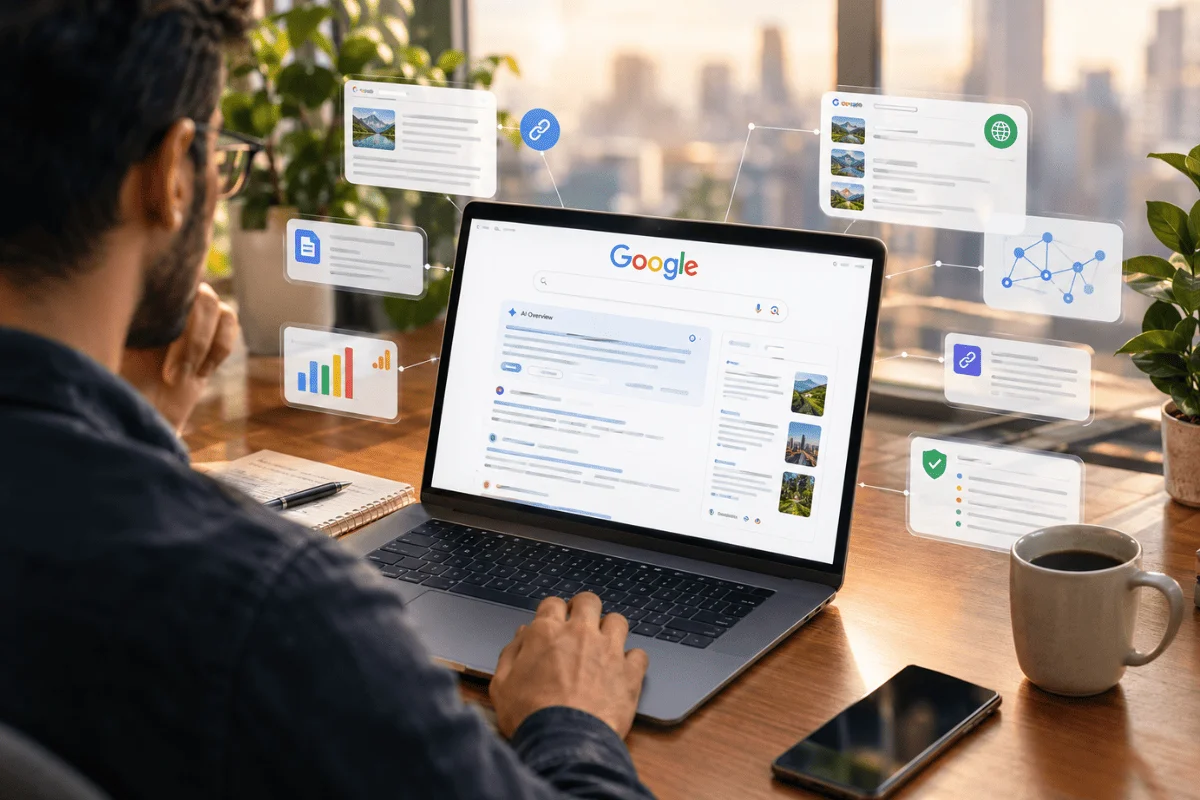
AI Overviews are AI-generated summaries that Google shows at the top of search results for queries where its systems decide "generative AI can be especially helpful," per Google's own documentation.
Instead of sending a searcher to one page, Google's Gemini models pull information from several sources, synthesize it into a short answer, and link out to where that information came from.
A few things worth knowing about how they actually work:
They favor multi-source answers, not single articles. Pew Research Center's analysis of nearly 69,000 real Google searches found 88% of AI summaries cited three or more sources, and only 1% relied on a single source.
They're short. The median AI summary Pew measured ran 67 words, though length varies a lot by query.
They pull from a search engine's own top-ranking pages, then trim. Most AI Overview citations already rank well organically — appearing in an AI Overview is closer to "graduating" from strong SEO than bypassing it.
Google can't guarantee accuracy. Google's own guidance tells users to double-check AI Overview claims in more than one place, which is exactly why sourcing and factual precision matter so much on your end — sloppy or unverifiable claims are the first thing Gemini filters out.
Why AI Overview Citations Matter More Than Ever
Here's the tension every SEO is navigating right now: AI Overviews reduce clicks overall, but the few sites that get cited see outsized value. Both things are true at once.
Metric | Data Point | Source |
Click rate with an AI Overview present | 8% of visits resulted in a click on a standard search result | |
Click rate with no AI Overview | 15% of visits resulted in a click on a standard search result | |
Click rate on links inside the AI Overview itself | 1% of visits resulted in a click on a cited link within the AI Overview | |
Share of searches that produced an AI summary (March 2025) | 18% of approximately 69,000 Google searches studied showed an AI summary | |
Share of Google SERPs showing an AI Overview | Fluctuated from around 6% (Jan 2025) to approximately 25% (Jul 2025), settling near 16% by late 2025 | |
Query intent most likely to trigger an AI Overview | Informational queries saw the largest share of AI Overview triggers, while commercial and transactional queries appeared less frequently |
The takeaway for DTC and ecommerce brands: fewer total clicks are up for grabs, but a citation inside the summary is worth chasing, since it's now functioning as a trust signal on top of whatever traffic it still sends.
And AI Overviews aren't confined to top-of-funnel "what is" queries anymore — Semrush's data shows them creeping into comparison and buying-intent searches too, which is exactly the territory DTC brands compete in.
11 Tactics to Rank in Google's AI Overviews
1. Lead With a Direct Answer, Not a Preamble
Skip the throat-clearing. Open each page — and each major section — with a two-to-three sentence answer before you add context. If someone asks "how long does kava tea take to work," the first sentence should answer that, not set up the topic.
This isn't just a readability tip. Gemini extracts short, self-contained passages to build its summary, and a buried answer is an answer it has to work to find — which means it often skips it for a competitor's page instead.
2. Write Every Section as a Self-Contained Passage
Structure content in 100–150 word blocks, each one answering a single sub-question under its own H2 or H3. Phrase headers as actual questions ("What Does Kava Taste Like?") instead of vague labels ("Overview") — that's the format AI Overviews pull from most consistently.
A practical checklist for each passage:
One idea per section — don't answer two questions in one block
Answer first, explain second
No answer should require the reader to have read three paragraphs above it to make sense
3. Target Long-Tail, Intent-Specific Keywords
Broad head terms ("kratom," "functional beverages") are crowded and rarely map to one clear answer. Long-tail, question-shaped queries ("is kratom tea safe to drink daily," "Kava vs. alcohol for anxiety") signal exactly what the searcher wants — which is precisely the shape of query AI Overviews are built to answer directly.
Pull these from Google's own "People also ask" boxes, "Related searches," and tools like AlsoAsked or AnswerThePublic, then build a dedicated section (not just a keyword mention) for each one.
4. Add Schema Markup
Structured data doesn't guarantee a citation, but it removes ambiguity for Google's systems about what your content is and what it says. Prioritize:
FAQPage schema for Q&A sections
HowTo schema for step-by-step processes
Article schema with author and date fields
Product schema for ecommerce and comparison pages
Use Schema.org's own vocabulary and validate with Google's Rich Results Test before publishing — malformed markup is worse than none.
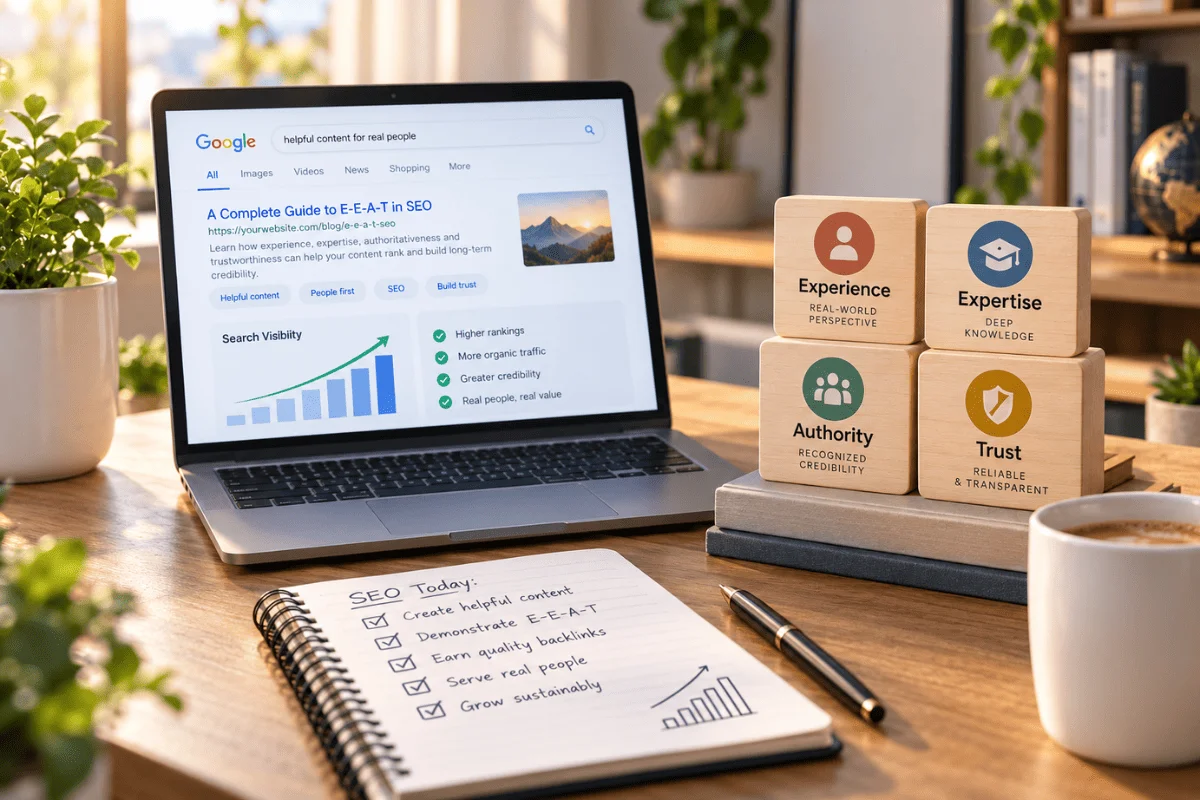
5. Strengthen E-E-A-T Signals
Google's quality guidelines weight Experience, Expertise, Authoritativeness, and Trustworthiness heavily for topics that affect health, money, or safety — which covers most of what DTC beverage, wellness, and supplement brands publish. Concretely, that means:
A named author with a real bio, credentials, and a linked profile — not "Admin" or "Team"
First-hand detail ("we tested this," "our lab results showed") instead of generic claims
Every statistic linked to its original source, not a roundup or secondary blog
Visible trust signals: certifications, lab testing disclosures, press mentions
6. Keep Content Fresh
Google's systems use freshness as a relevance signal, and AI Overviews lean on it too — a page with outdated stats or a broken link is an easy one for Gemini to skip in favor of something more current. Set a recurring cadence (quarterly, at minimum, for anything with statistics) to:
Update any stat or study that's more than 12–18 months old
Re-verify every external link still resolves
Add a visible "last updated" date
7. Write in Plain, Conversational Language
Aim for a 7th–8th grade reading level. Short sentences, active voice, contractions where natural. This isn't about dumbing content down — it's that both Gemini and human searchers process direct, unambiguous language faster than dense, jargon-heavy copy, and AI summarization tools are trained to favor clarity over cleverness.
8. Build Topical Authority With Content Clusters
A single great article rarely earns consistent citations. What does: a hub page (your cornerstone guide) surrounded by cluster content that covers every sub-topic in depth, all interlinked. This tells Google your site is a genuine authority on the subject, not a one-off.
For DTC brands, that might look like a pillar page on "functional beverages" linking out to dedicated posts on ingredients, dosage, comparisons, and use cases — each answering its own specific query. If you need a framework for planning this kind of structure at scale, Outreach Influencers' AI SEO service is built specifically around entity and topical-cluster optimization for AI citation.
9. Earn Backlinks and Brand Mentions From Credible Sites
Backlinks still function as a trust signal for AI systems, the same way they do for traditional rankings — a page other reputable sites vouch for is more likely to be treated as a reliable source to cite. Beyond that, brand mentions (even unlinked ones) on trade publications, review sites, and industry roundups build the kind of surface-level recognition that makes Gemini more confident citing you by name.
Two levers worth prioritizing:
Editorial link building on real, relevant, human-vetted sites.
Digital PR campaigns that land data-driven stories on outlets your customers already trust
10. Show Up Beyond Your Own Website
AI Overviews don't source exclusively from brand-owned blogs. Per Ahrefs' ongoing Brand Radar tracking of millions of AI Overview citations, YouTube and Reddit are consistently the two most-cited domains inside Google AI Overviews, each holding roughly a fifth of total citation share as of mid-2026. A brand with zero footprint on either platform is competing with one hand behind its back.
Practical starting points:
Answer real questions in relevant subreddits — genuinely helpful, not promotional
Publish short explainer videos on YouTube with accurate titles and transcripts
Claim and complete listings on category-relevant review platforms
11. Use Multimedia With Proper Markup
Images, charts, and short videos give AI systems another format to draw from and give human readers another reason to stay on the page. Every asset should carry:
Descriptive, keyword-relevant alt text (written for a screen reader, not stuffed with keywords)
A compressed file size that doesn't slow the page down
Placement directly next to the text it illustrates, not buried at the bottom of the post
Frequently Asked Questions
What are Google AI Overviews?
AI Overviews are AI-generated summaries Google shows above standard search results for queries where it decides a synthesized answer will help the user faster than a list of links. They pull from multiple sources and cite where the information came from.
Do AI Overviews hurt organic traffic?
For most queries, yes — Pew Research Center found click-through drops by roughly half when an AI Overview is present. But being cited still carries trust value, and AI Overviews skew toward informational queries — bottom-of-funnel, transactional searches are less affected.
How long does it take to start appearing in AI Overviews?
There's no fixed timeline — it depends on your existing organic rankings, since most citations go to pages that already rank well. Expect it to move alongside, not ahead of, your core SEO progress.
Do I need to add an llms.txt file?
It's a low-effort, low-risk addition, but there's no verified evidence yet that it directly increases citation rates. Treat it as a nice-to-have, not a priority over structure, sourcing, and E-E-A-T.
Is GEO different from SEO?
Generative Engine Optimization (GEO) shares the same foundation as SEO — helpful, well-structured, well-sourced content — but adds specific emphasis on passage-level clarity, schema, and off-site presence on platforms like Reddit and YouTube that traditional SEO checklists often skip.
Conclusion
Getting cited in AI Overviews isn't a separate playbook from good SEO; it's the same fundamentals (clear structure, real expertise, credible links) applied with more precision. If you'd rather have that authority-building work — the backlinks, the PR, the off-site presence — handled for you, see how Outreach Influencers approaches it, or check the case studies to see it in action.