The drink brands winning on TikTok are not always outspending you.
They are out-creating you.
That is the shift small beverage brands need to understand.
You do not need a massive media budget, a celebrity partnership, or a studio full of expensive equipment to get attention on TikTok. You need content that earns the pause, feels native to the platform, and gives people a reason to watch, react, share, or recreate it.
That is where beverage TikTok marketing becomes especially powerful.
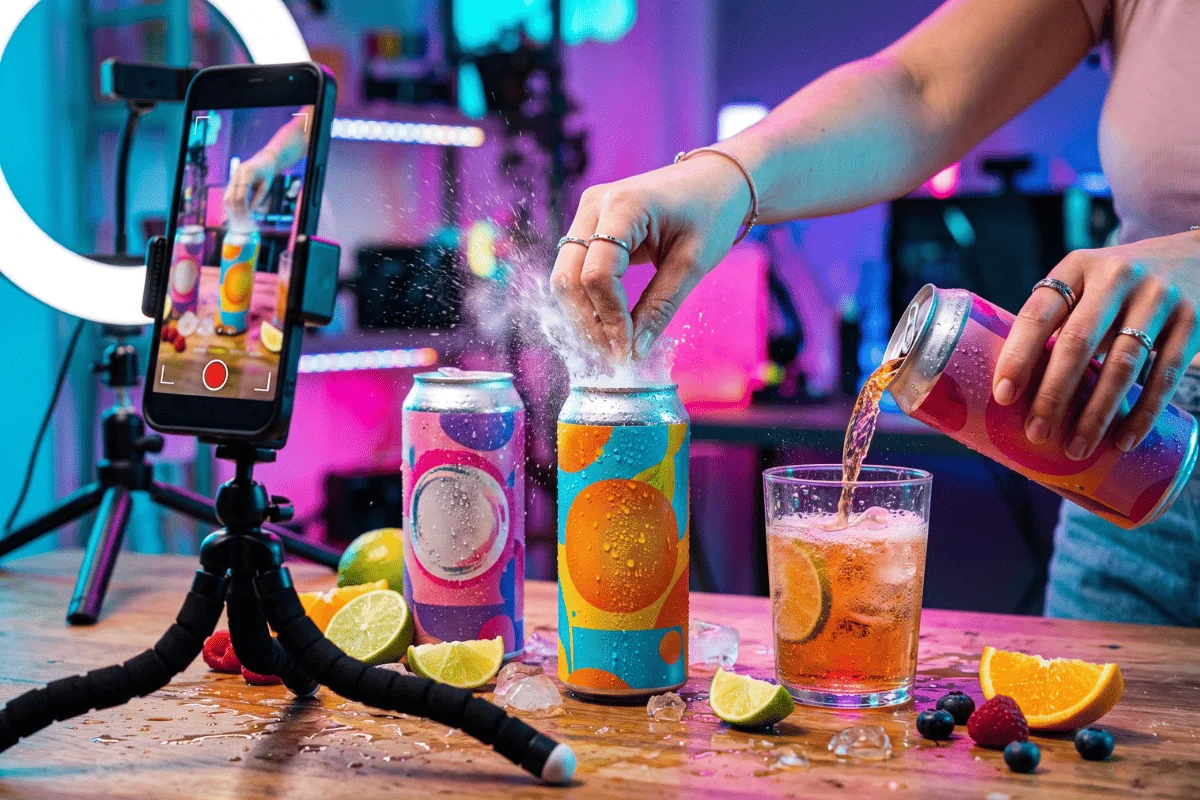
Drinks are naturally visual. The pour, the fizz, the color, the packaging, the reaction, the ritual, the "Would you try this?” moment—all of it can become content.
And the best-performing videos often do not look like ads.
They look like:
a founder telling the real story behind the product
a creator trying the drink for the first time
a quick POV that feels painfully relatable
a product comparison that sparks debate
a simple reaction clip people want to send to a friend
That is the real opportunity.
Small beverage brands can compete with much larger companies by producing more relevant content, testing ideas faster, and using real people to make the product feel discoverable rather than advertised.
This guide breaks down the no-budget playbook: how to create stronger hooks, choose formats that travel, build a realistic posting cadence, use UGC effectively, and turn TikTok attention into actual sales.
Because on TikTok, the brand with the biggest budget does not automatically win.
The brand that understands how to create attention does.
Why Organic Beats Ads for Beverage Discovery
Paid ads can put your drink in front of people.
Organic content can make people care.
TikTok users come to discover, react, and be entertained, not to watch polished commercials. That is why creator videos, founder stories, taste tests, and real reactions often feel more natural and engaging.
For small beverage brands, this means you can compete on:
Speed
Creativity
Personality
Consistency
Real customer reactions
This is a major advantage of beverage TikTok marketing.
1. Use Organic Content to Test What Works
Organic content lets you test hooks, formats, and product angles without paying for every experiment.
Signal | What It Shows |
Comments | What people care about |
Shares | What spreads |
Watch time | Whether your hook works |
Saves | What people value |
When something performs well, create more versions of it.
2. Make Content That Feels Native
Overproduced content often feels like an ad.
TikTok content should feel faster, more human, and natural.
Ad-first: “Introducing our delicious new beverage.”
Organic-first: “We gave this drink to five people without telling them what it was.”
The first sells.
The second creates curiosity.
Curiosity earns the next three seconds.
3. Organic Creates Demand. Ads Capture It.
Organic content builds familiarity and trust before someone sees your ad.
A customer may already have watched a review, seen your founder story, or noticed your product in several videos.
That makes the paid ad more effective.
Organic builds demand. Paid media captures it.
So instead of asking
“How much do we need to spend to get noticed?”
Ask:
“What can we create that people would choose to watch?”
The 3-Second Hook: Win the Scroll Before You Sell the Drink
On TikTok, your first three seconds decide whether someone keeps watching or keeps scrolling.
That means your opening should not explain everything.
It should create a reason to stay.
For beverage brands, the strongest hooks usually fall into three categories:
1. Curiosity Hooks
Give viewers just enough information to make them want the answer.
Bad:
“Here is our new beverage.”
Better:
“We gave this drink to five people without telling them what was in it.”
Other examples:
“This flavor gets the most divided reactions.”
“We did not expect this one to become the bestseller.”
“Most people guess the wrong flavor.”
2. Relatable Hooks
Start with a situation your target customer instantly recognizes.
Bad:
“Our drink is perfect for busy people.”
Better:
“POV: You want something fun to drink but you are tired of ordering the same thing.”
Other examples:
“When everyone else is drinking the same boring option.”
“POV: Your fridge has drinks, but somehow nothing sounds good.”
“For people who choose the drink before they choose the meal.”
3. Pattern-Interrupt Hooks
Show something unexpected immediately.
This can be a surprising reaction, unusual pour, bold visual, comparison, or statement.
Bad:
A slow product shot with music.
Better:
Open with someone taking a sip and saying, “Wait. What is actually in this?”
Other options:
Start with the final reaction before showing the product.
Show two drinks side by side and ask viewers to choose.
Lead with a dramatic pour, color change, or close-up.
Open with a controversial opinion about a flavor.
A stronger structure is
Hook → Curiosity → Product → Reaction → CTA
For example:
“Everyone in the office hated the name of this flavor.”
Then:
“So we made them taste it.”
Then show the reactions.
That is a story.
And stories are harder to scroll past than product announcements.
The goal of the first three seconds is simple:
Do not sell the drink yet. Earn the next three seconds first.
The TikTok Formats That Travel
You do not need a new idea every day.
You need a few repeatable formats that are easy to recognize, easy to recreate, and easy to adapt around your product.
For beverage brands, four formats tend to give you the most room to create consistently.
1. POV Content
POV videos place the viewer inside a familiar moment.
Examples:
“POV: You find a drink that actually becomes your fridge staple.”
“POV: You said you were only going to try one flavor.”
“POV: Your friend asks for one sip.”
The product fits naturally into the scene instead of becoming the entire script.
2. Teardowns
Teardown-style content explains why something works.
You can break down:
packaging
flavor choices
product positioning
menu pairings
creator campaigns
For example:
“Why this beverage packaging gets attention in under three seconds.”
These videos build authority while still feeling useful and native.
3. Before-and-After Content
Transformation gives viewers a reason to stay for the payoff.
For beverage brands, that could mean:
plain setup vs styled serve
basic mocktail vs upgraded version
empty fridge vs fully stocked fridge
raw product shot vs finished creator content
The contrast does the work.
4. Founder Stories
People connect with people faster than they connect with logos.
Founder content can cover:
Why the brand started
The first product idea
Early mistakes
Rejected flavors
Behind-the-scenes decisions
The best founder stories are specific.
Weak:
“We wanted to create a better beverage.”
Stronger:
“We made 17 versions of this flavor before anyone in the office agreed on one.”
That detail creates a story people can remember.
The biggest advantage of these formats is that they can become recurring series.
One POV can become ten.
One teardown can become a weekly format.
One founder story can lead to an entire behind-the-scenes series.
That makes consistency much easier.
Do not chase a brand-new concept every day. Build formats you can repeat until the audience starts recognizing them.
Cadence and Consistency: The 30-Piece Month
Going viral is unpredictable.
Publishing consistently is not.
For a small beverage brand, a strong starting target is 30 pieces of content per month.
That does not mean creating 30 completely different ideas.
It means turning a few strong concepts into multiple posts.
For example:
8 POV videos
6 creator or UGC clips
6 product reactions or taste tests
4 founder or behind-the-scenes stories
3 trend-led posts
3 educational or comparison videos
One Idea Should Become Multiple Posts
A single concept can be repurposed across different hooks, creators, products, and angles.
Take one taste-test idea.
You could turn it into:
“Guess the flavor."
“Rate this from 1 to 10."
“Which one would you choose?”
“First sip reaction”
“The flavor nobody expected to win”
Same format.
Different execution.
Consistency Gives You More Chances to Learn
The goal is not to make every post go viral.
The goal is to create enough content to discover what your audience responds to.
After 30 posts, you should have a much clearer idea of:
Which hooks hold attention
Which formats earn comments
Which products create curiosity
Which creators feel most natural
Which ideas deserve another version
Think of every post as a test.
More useful tests create better creative decisions.
The brands that grow organically are rarely waiting for one perfect video.
They are publishing, learning, adapting, and doing it again.
Turning TikTok Views Into Sales
Views are useful.
But views alone do not grow a beverage brand.
The real goal is to make the next step obvious.
1. Build a Simple Bio Funnel
Your TikTok profile should quickly answer three questions:
What do you sell?
Why should someone care?
Where should they go next?
Keep the bio clear, use a recognizable profile image, and send visitors to the most relevant landing page rather than making them search for the product.
The path should feel simple:
Video → Profile → Product Page → Purchase
Every extra step creates friction.
2. Use UGC to Reduce the Trust Gap
A branded video tells people what the product is.
UGC shows them what it feels like to discover it.
That is why creator content can be especially valuable for small beverage brands.
Useful UGC angles include:
First-sip reactions
Flavor rankings
Unboxings
“Which one would you choose?” comparisons
Everyday product moments
Honest creator commentary
The content should feel natural enough to belong on TikTok, while still giving viewers a clear reason to explore the brand.
3. Do Not Force the CTA
Not every video needs to end with
“Buy now.”
Often, a lighter CTA works better:
“Which flavor would you try first?”
“Would you try this?”
“The full lineup is in our bio.”
“Send this to the friend who would pick this flavor.”
The best content creates interest first.
Then the funnel captures it.
The goal is not just to get more views. It is to turn curiosity into profile visits, trust, and eventually sales.
You Do Not Need a Bigger Budget. You Need More Content.
Small beverage brands do not need to outspend larger competitors on TikTok.
They need to create faster, test more often, and learn what actually earns attention.
The playbook is simple:
Win the first three seconds
Use repeatable content formats
Publish consistently
Turn strong ideas into multiple posts
Use UGC to build trust
Make the path from view to purchase easy
That is what strong beverage TikTok marketing looks like.
Not one perfect viral video.
A consistent system that gives your brand more chances to be discovered.
So the real question is:
What is stopping you from posting daily?
At Outreach Influencers, we help beverage brands build organic social and UGC systems designed to turn content into attention, trust, and growth.
Get a free content teardown and see what your brand should be posting next.